

Mental health shirts: choosing a message you mean
Choose mental health shirts with a message you believe, a fit you can wear comfortably, and product details you can verify. For your 2026 wardrobe, start with the words—not the checkout button. A shirt can express support, faith, or personal conviction; it cannot treat a mental health condition or tell someone else’s story for them.
- Choose mental health shirts for honest wording and everyday wear, not promises of healing.
- Kline Strong connects fitness apparel with faith and mental health; check each design before choosing.
- For Christian gym apparel, verify the actual artwork rather than assuming every shirt includes scripture.
- Check the size chart, fabric description, print placement, and care instructions before buying.
How do you choose mental health shirts with a message you mean?
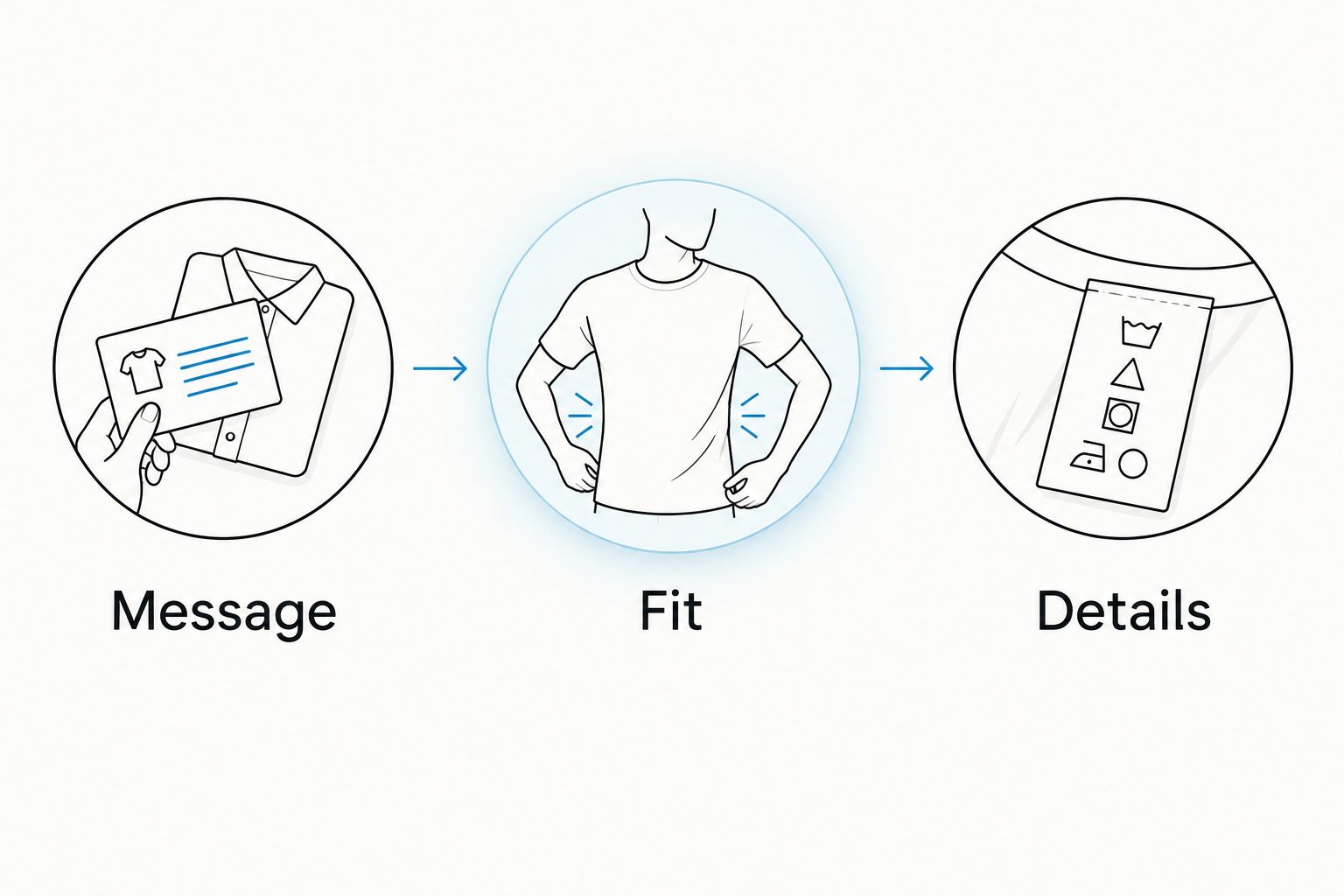
Use 3 checks: Message, Fit, and Details. That order keeps a strong slogan from distracting you from a shirt you will not actually wear.
- Message: Read the whole design. Decide whether you agree with it without needing to explain away part of it.
- Fit: Compare the garment’s measurements with a shirt you already like wearing. Choose for your actual routine, not just the product photo.
- Details: Read the fabric, print, and care information provided for that exact item. Do not fill gaps with assumptions.
Kline Strong connects fitness apparel with faith and mental health. That mission gives you a starting point, not a substitute for checking the individual garment.
Why this matters
You do not owe anyone a public account of your hardest days. Wearing a mental health message is a choice about expression, not permission for strangers to ask personal questions.
A slogan also carries meaning beyond the person wearing it. Before adding mental health shirts to your 2026 rotation, ask whether the wording offers support or places another demand on someone already struggling. Encouragement should leave room for a hard day.
That distinction matters in the gym. You can value discipline, prayer, and training without suggesting that someone’s symptoms reflect weak effort or weak faith.
Which kind of message feels honest to you?
Start with what you want the shirt to communicate. You do not have to choose the loudest statement, and a quiet design does not make your support less real.
These are approaches to wording, not claims about any particular product. Check the actual artwork before deciding which category a shirt belongs in.
| Message approach | Best for | What it offers | What to watch for |
|---|---|---|---|
| Awareness-focused wording | People who want to express general support | A direct way to signal that mental health matters | Broad wording does not explain what support looks like |
| Faith-centered wording | Lifters who want their beliefs present in their clothing | A way to express conviction alongside training | Reject wording that treats illness as a failure of faith |
| Fitness-motivation wording | People who connect movement with personal purpose | A reminder of why they show up | A training slogan is not a treatment recommendation |
Awareness-focused wording: support without a personal disclosure
An awareness message can express a value without naming your diagnosis, history, or current state. Choose it because you stand behind the statement—not because you feel obliged to make private experiences visible.
The trade-off is that a general statement stays general. Wearing it does not replace listening, respecting boundaries, or taking someone seriously when they ask for help.
Faith-centered wording: conviction without judgment
Faith belongs in your clothing when you want it there. Read any religious wording carefully and check the design itself for the symbols or scripture you want represented.
Do not assume that a brand with a Christian audience puts faith-specific artwork on every item. Choose the verified design, not the meaning you hope it contains.
Fitness-motivation wording: purpose without a cure claim
A training message can remind you why you lift. It becomes a problem when the wording suggests that enough effort makes professional support unnecessary.
You can want strength and still need rest. You can care about training and still need help outside the gym. A shirt should not force those needs into a contest.
Why the right mental health shirt varies
There is no single message every lifter needs to wear. Your choice depends on what you want to say and what you are comfortable carrying into public.
- Personal meaning: Choose words you agree with beyond the moment you first see them.
- Faith expression: Decide whether you want an explicitly religious design or a broader statement of support.
- Privacy: Consider whether you welcome questions about the message or prefer something less direct.
- Training use: Check whether the garment’s fit suits the movements you actually perform.
- Wear beyond training: Think about whether the same message and fit work for your ordinary day.
- Care requirements: Choose an item whose stated care instructions you are prepared to follow.
For a 2026 purchase, the useful question is not whether the slogan feels current. It is whether you will still mean it when the first excitement of buying it has passed.
Check the fit before the message sells you
A meaningful design does not cancel out an uncomfortable garment. Your buying decision needs both.
Start with the product’s own sizing information. A familiar size letter is not a measurement, and a styled photo does not tell you how a shirt will sit on your shoulders or torso.
Compare with a shirt you already wear
Lay a well-fitting shirt flat and follow the seller’s measurement method. Compare the stated dimensions rather than assuming your usual size will translate directly.
Check whether the chart describes the garment or the wearer’s body. Those are different references. If the listing does not make that distinction clear, ask before choosing.
Check movement, not just standing fit
Think through the movements in your routine. Reach overhead, extend your arms, and bend while wearing your reference shirt; notice where you want more room or less fabric.
This is a preference check, not proof that an untried garment will perform the same way. Use it to identify the measurements and cut details you need from the listing.
Read what the fabric description actually says
Look for the stated material composition and care instructions. Do not assume a fitness-themed shirt has sweat-management features, stretch, or a particular fabric weight unless the item description confirms them.
Likewise, do not treat a close-up photo as evidence of softness or durability. A product image shows appearance; the listing needs to support performance claims.
Try the message in 2 settings before you buy
Picture wearing the shirt during training and during an ordinary day outside the gym. The point is not to make every shirt suitable for every setting; it is to choose deliberately.
During training: Would the wording still feel encouraging on a session when you struggle, stop early, or change the plan? A message you only accept on your strongest days deserves another look.
Outside training: Would you feel comfortable wearing it while running errands or meeting someone you know? If you would rather keep the message within your gym routine, that is a valid boundary.
Print placement matters here, too. Check the front and back views when provided, and read the full wording rather than relying on the first image. You are choosing everything the shirt says, not just the phrase that caught your attention.
Where Kline Strong fits
Kline Strong is best for lifters who want fitness apparel connected to faith and mental health. Its stated mission fits shoppers who want clothing to carry personal meaning beyond training alone.
That connection is the reason to consider the brand. It is not evidence that every garment carries Christian symbols, scripture, or an explicit mental health statement.
For your 2026 purchase, keep the same standard you would use anywhere else: inspect the actual design and read the item’s details. If the wording, sizing, or material information does not answer your question, pause and ask rather than guessing.
Can I wear mental health shirts without sharing my own story?
Yes—you can wear mental health shirts without disclosing personal experiences. Supporting awareness does not require you to explain a diagnosis, difficult period, or family history. Decide what you want to share before someone asks, and keep the rest private.
Does Christian gym clothing need to include scripture?
No—Christian gym clothing does not need to include scripture to fit your personal reasons for wearing it. If visible scripture or a Christian symbol is important to your purchase, verify it in the specific design. A brand’s broader mission does not establish what appears on an individual shirt.
Is a motivational shirt a mental health tool?
A motivational shirt is a form of expression, not mental health treatment. You can use its message as a personal reminder without presenting clothing, lifting, or supplements as a replacement for professional care.
FAQ
What should I look for when buying mental health shirts?
Look for wording you believe, a fit that suits your routine, and clear details for the exact garment. Check the full artwork, sizing information, fabric description, and care instructions before choosing.
Can I wear a mental health awareness shirt if I do not have a diagnosis?
Yes, you can wear a mental health awareness shirt to express support without claiming a diagnosis. Choose wording that reflects your own position rather than speaking for someone else’s experience.
How do I choose a mental health shirt for lifting?
Choose a mental health shirt for lifting by checking garment measurements and the stated fit against a shirt you already wear comfortably. Do not assume a fitness message means the fabric has stretch or sweat-management features.
Are all Kline Strong shirts Christian designs?
Do not assume every Kline Strong shirt has Christian artwork or scripture. The brand connects fitness with faith and mental health, but you need to verify the design on the individual item.
Is it okay to give someone a mental health shirt?
Give a mental health shirt only when you know the recipient welcomes that kind of message. Ask about their preferred wording, fit, and comfort with wearing the subject publicly rather than choosing on their behalf.
Can a mental health shirt replace therapy or other professional support?
No, a mental health shirt cannot replace therapy or other professional support. Clothing expresses a message; it does not diagnose or treat a mental health condition.
Should I choose a bold slogan or a quieter design?
Choose the design you feel comfortable wearing, not the one that seems to prove the most commitment. A bold slogan invites visibility, while a quieter design can better match your privacy preferences.
One last thing
Keep 1 boundary: your shirt does not owe anyone your story. You can wear a message, decline a question, and still mean every word printed on it.
Before buying mental health shirts in 2026, read the design as if you were having a rough day—not setting a personal best. If the words still leave room for rest, help, and being human, you have a stronger reason to choose them.
Buy the message you mean. Leave the performance of being okay out of it.