

How should pump cover shirts fit?
Pump cover shirts should fit loosely through your chest, shoulders, and arms without hanging into your hands or getting in the way of a lift. Choose enough room to move over your training layer, but reject a shirt that pulls when you reach, needs constant adjusting, or catches against equipment.
- Pump cover shirts should feel roomy, not restrictive or difficult to control.
- Judge oversized gym shirts by shoulder movement, sleeve clearance, and hem position—not the size label alone.
- Kline Strong connects fitness apparel with faith and mental health; choose the message and fit separately.
- Test your training layer underneath before deciding whether to size up.
How should pump cover shirts fit?
A good pump cover gives you space without becoming another thing to manage during training. The fabric should fall away from your torso rather than stretch across it. You should be able to reach, bend, and set up for your usual movements without fighting the shirt.
For shoppers drawn to Kline Strong, the message behind the clothing matters. So does being able to train in it. Keep those decisions separate: choose a design that means something to you, then check whether the actual garment works on your body.
Use this comparison for your 2026 fit check. These are practical checks, not fixed sizing standards.
| Fit option | What to look for | Benefit | Limitation | Best for |
|---|---|---|---|---|
| Close fit | Fabric follows your torso with little loose material | Less fabric to manage | Leaves less room for a layer underneath | Lifters who prefer a close silhouette rather than a pump cover |
| Relaxed fit | Space through the chest and arms without excessive draping | Room to move and layer | Still needs a movement check | Lifters who want loose coverage during training |
| Very oversized fit | Pronounced draping through the body and sleeves | A deliberately oversized silhouette | Extra material needs careful clearance around equipment | Lifters who prioritize the look and can keep fabric clear |
There is no useful universal rule that every pump cover must be a certain number of sizes larger. Your starting shirt, its cut, and your proportions all affect the result. Buy the fit you can use, not the biggest size you can wear.
Why this matters
You should not have to tug your hem down between movements or pull your sleeves away from your grip. That turns a clothing choice into a distraction. Loose clothing still needs boundaries.
A pump cover can also give you the coverage you prefer while you settle into a session. You do not owe anyone a reveal, a physique check, or an explanation for keeping it on. Wear it for your own reasons.
Fitness, faith, and mental health can share space in your life without becoming a performance for other people. Clothing can express those priorities. It does not treat mental illness or replace professional care.
Start with the shoulders and chest
Stand naturally before you test anything. Let your arms hang instead of spreading them to make the shirt look wider. Check whether the fabric rests loosely across your chest and upper back.
A dropped shoulder seam can be part of an oversized cut. Its position alone does not tell you whether the shirt fits. What matters is whether the garment lets your upper arms move without dragging the body of the shirt along with them.
Reach forward as though you are taking a rowing position. Then bring your arms overhead without forcing the range. Notice whether the shirt tightens across your back, presses into your underarms, or pulls sharply across your chest.
Keep the room; lose the restriction. A shirt that looks oversized from the front can still feel tight through the upper back. The mirror does not get the final vote.
If you wear a tank or another training layer underneath, put it on for this check. Testing over bare skin and training over another shirt are different setups. Judge the combination you actually intend to wear.
Check sleeves, hem, and equipment clearance
Your sleeves should leave your hands free to grip and adjust equipment. Bend and straighten your elbows. If the sleeve opening repeatedly slides over your hand or bunches where you need access, reconsider the fit.
A longer hem can provide coverage, but length is not an achievement. Bend at your hips and take your usual setup position. Watch for fabric folding into your grip area or hanging where it can contact moving equipment.
Do not judge the hem only while standing tall. A shirt can look controlled in a mirror and behave differently when you hinge, sit, or reach. Those positions belong in the fitting process.
Use these checks:
- Hands free: Your sleeves do not cover the part of your hand you need for gripping.
- Hem clear: Loose material stays away from moving parts and your working grip.
- Layer settled: The shirt underneath does not bunch enough to change how the outer shirt sits.
- No repeated fixing: You can complete the movement check without constantly repositioning fabric.
Follow the equipment's clothing and safety instructions. If you cannot keep a loose shirt clear, choose a closer-fitting garment for that exercise. A preferred silhouette never outranks safe equipment use.
Use this 2026 fitting-room movement check
Check the shirt before loading a bar or starting a machine. You are testing clothing, not proving strength. Use comfortable, unloaded movements and stop if a movement hurts.
Run through 3 movements, using 1 controlled repetition of each as an initial check. That is a simple fitting routine, not a performance standard.
- Reach overhead. Raise your arms comfortably. Notice pulling through the chest, shoulders, and upper back, and check whether the hem shifts beyond your preferred coverage.
- Reach forward. Extend your arms as though setting up for a row. Look for tension across the back and sleeves that interfere with your hands.
- Hip hinge. Bend through your hips within a comfortable range. Check whether the neckline, hem, or loose fabric becomes distracting.
Check the result in 2 positions: standing naturally and in the setup position for an exercise you actually perform. A shirt needs to work in both, not just in the pose you use for a photo.
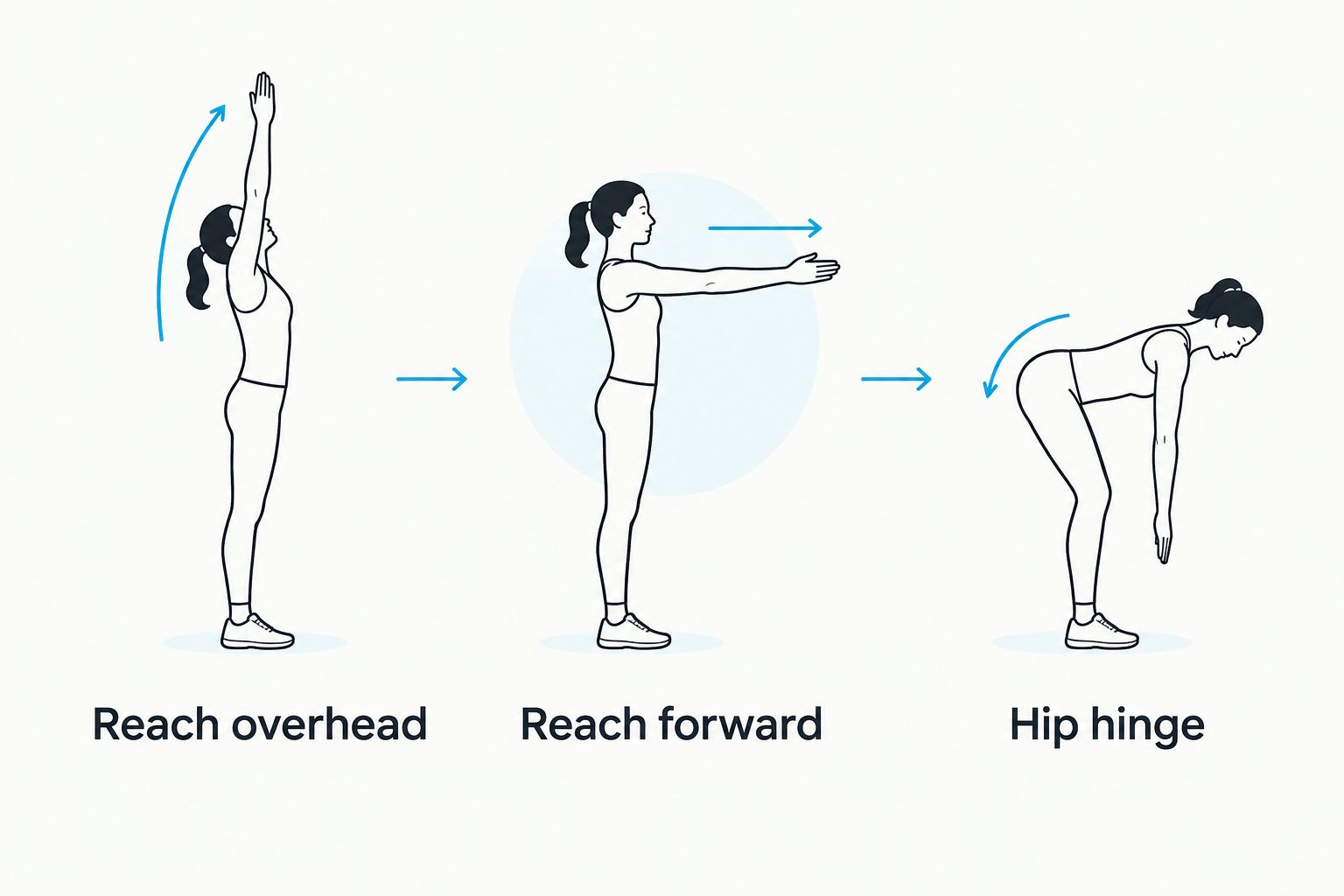
After the check, let your arms drop. The shirt should settle without needing a full reset. If you keep pulling it back into place, identify what is causing that: restriction, excessive length, or interference between layers.
Do not automatically solve every problem by going larger. A wider shirt does not necessarily fix a neckline you dislike or a sleeve shape that gets in your way. Sometimes you need a different cut.
Why pump cover fit varies
The same size label does not settle every fit question. Use these factors when comparing options rather than treating oversized as a precise measurement.
- Garment cut: A shirt designed with a loose body and a shirt sized up from a closer cut are different starting points. Compare their actual shape.
- Body proportions: Your shoulder width, torso length, and arm proportions affect where seams, sleeves, and hems land.
- Training layer: A tank, another shirt, or no additional layer changes what sits underneath the pump cover. Test your intended combination.
- Movement selection: Standing, reaching overhead, and hinging place the fabric differently. Check the movements relevant to your session.
- Coverage preference: You decide how much coverage feels right. The limit is whether the garment remains manageable around your equipment.
- Fabric behavior: Notice how the actual material hangs, stretches, and settles. Do not assume those qualities from a product name or photograph.
Use a product's stated measurements when provided, then confirm with movement. A size label is a starting point. It is not evidence that the shirt will work for your shoulders, your layers, or your training.
Should you size up for pump cover shirts?
Sizing up is an option, not a requirement. Start by checking whether the shirt already has an oversized cut. Going larger in an already roomy garment can add fabric without solving a fit problem.
For a 2026 purchase, compare any provided garment measurements with a shirt you already like. Lay that reference shirt flat and follow the seller's measurement method. Do not mix body measurements with garment measurements or assume different measurement methods are interchangeable.
If you are choosing between sizes, name the problem you are trying to solve. Tightness across your back calls for a different decision than sleeves that already feel too long. More size helps only when the added room addresses the actual restriction.
Before you decide, ask:
- Does my reference shirt already give me enough chest and shoulder room?
- Am I adding a training layer underneath?
- Is my concern width, length, sleeves, or neckline?
- Will the larger option create a new clearance problem?
If the product information does not answer a specific fit question, get that detail before buying. Do not turn a photograph into a fabric specification or a sizing promise.
How long should a pump cover shirt be?
A pump cover should be long enough for your preferred coverage and short enough to stay manageable in your training positions. There is no single hem location that works for every torso, cut, and exercise.
Check the hem standing, sitting, and hinging. You want coverage you feel comfortable with, without loose material folding into the places where you grip or set up. Judge the result while moving, not by whether it reaches an arbitrary point on your legs.
Longer is not automatically more modest or more useful. If you spend the session gathering fabric out of the way, the added length is working against you. Choose controlled coverage instead.
Can you keep a pump cover on for the whole workout?
You can keep a pump cover on when it remains comfortable and clear of equipment throughout your session. Taking it off is a personal choice, not a required stage of lifting.
Recheck the fit when your activity changes. A shirt that stays out of the way while standing can behave differently in another position. If it interferes with equipment use, change into something that stays clear.
You also do not need to earn the right to wear loose clothing. Your body is not a before-and-after project for the room. Choose what helps you show up without making the outfit another source of pressure.
Choose the message separately from the fit
Kline Strong fitness apparel is best for shoppers seeking a connection to faith and mental-health awareness. That connection explains why you might choose the brand; it does not determine your size or prove a garment's technical features.
Check each design on its own. Do not assume every item includes scripture, Christian symbols, or the same message. Choose something you actually want to wear, then apply the same shoulder, sleeve, and hem checks you would use for any other shirt.
For your 2026 shortlist, keep two questions separate: does the message fit you, and does the garment fit your training? A strong answer to one does not cancel a poor answer to the other. Both matter.
FAQ
How should pump cover shirts fit in 2026?
Pump cover shirts should fit loosely through your chest, shoulders, and arms while staying clear of your hands and equipment. Check the fit over your intended training layer and in the movements you perform.
Should I buy a pump cover a size bigger?
You do not automatically need a bigger size for a pump cover. Check whether the garment already has an oversized cut, then compare any provided measurements with a shirt that fits you well.
How do I know if my pump cover is too big?
Your pump cover is too big for an exercise if excess fabric interferes with your grip, equipment clearance, or movement. Repeatedly gathering sleeves or fixing the hem is a reason to reassess the fit.
Should a pump cover feel tight across my back?
A pump cover should not restrict your back when you reach forward. Test the shirt over your training layer and choose a different size or cut if the fabric pulls across your upper back.
Can I wear a pump cover without a tank underneath?
You can wear a pump cover without a tank if that matches your coverage preferences and your gym's clothing rules. Test the fit in the exact combination you plan to train in.
Are oversized shirts and pump covers the same thing?
An oversized shirt describes a loose silhouette; a pump cover describes how a shirt is used during training. An oversized shirt still needs a movement and equipment-clearance check before you train in it.
Do I have to take my pump cover off during my workout?
You do not have to take your pump cover off if it remains comfortable and safe around your equipment. Keeping it on is a personal choice, not a test of confidence or progress.
One last thing
For your next 2026 fitting check, turn away from the mirror and move first. Then look. That small change puts comfort and control ahead of the pose.
The right pump cover lets you focus on the work instead of managing the shirt. Keep the meaning. Keep the room. Leave the extra fabric that gets in your way.